
Char Dham Yatra in Your Own Car: Complete 11-Day Planning Guide
By Zubair · 28 Jul 2026 · 120 reads
Quick Answer
Char Dham in your own car is a 10–12 day, 1,600–1,800 km circuit covering Yamunotri, Gangotri, Kedarnath and Badrinath in that traditional order. The best windows are May–June and September–October; the temples close around Diwali and reopen in late April. Kedarnath requires a 22 km trek or helicopter from Sonprayag. Budget ₹55,000–₹85,000 for a family of four including fuel, stay, food and a driver at ₹1,799 per day.
Key Takeaways
- Traditional order: Yamunotri → Gangotri → Kedarnath → Badrinath.
- 10–12 days, 1,600–1,800 km — rushing it into 7 days means 8-hour driving days.
- Best windows: May–June and September–October.
- Kedarnath needs a 22 km trek or helicopter from Sonprayag.
- Temples close around Diwali and reopen late April.
- ₹55,000–₹85,000 for a family of four, all-in.
- Book Kedarnath and Badrinath stays 2–3 months ahead in peak season.
Char Dham in your own car is the version of the yatra that gives you control — your own schedule, your own stops, your own medicines in the boot. It is also the version that requires the most preparation, because ten days on Himalayan roads leaves very little margin for a vehicle problem or a bad booking decision.
This is the practical planning guide: the itinerary, the stays, the costs, and the bookings that must be made early.
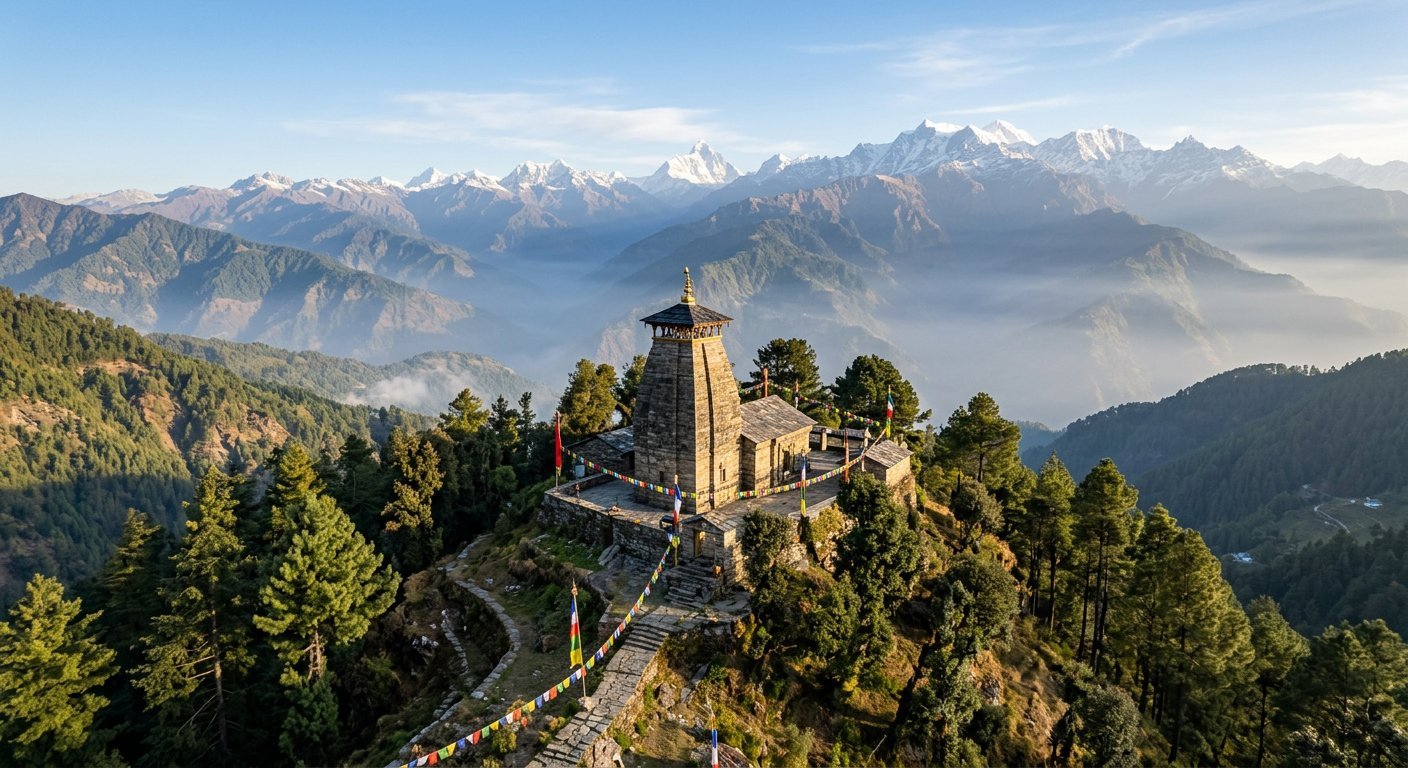
The Circuit in the Traditional Order
| Day | Route | Distance | Stay |
|---|---|---|---|
| 1 | Dehradun → Barkot | 180 km | Barkot |
| 2 | Barkot → Janki Chatti → Yamunotri → Barkot | 90 km + 6 km trek | Barkot |
| 3 | Barkot → Uttarkashi | 110 km | Uttarkashi |
| 4 | Uttarkashi → Gangotri → Uttarkashi | 200 km | Uttarkashi |
| 5 | Uttarkashi → Guptkashi | 220 km | Guptkashi |
| 6 | Guptkashi → Sonprayag → Kedarnath trek | 60 km + 22 km trek | Kedarnath or Sonprayag |
| 7 | Kedarnath → Sonprayag → Guptkashi | 22 km trek + 60 km | Guptkashi |
| 8 | Guptkashi → Joshimath | 180 km | Joshimath |
| 9 | Joshimath → Badrinath → Joshimath | 90 km | Joshimath |
| 10 | Joshimath → Rishikesh | 250 km | Rishikesh |
| 11 | Rishikesh → Dehradun | 45 km | — |
The traditional order is Yamunotri, Gangotri, Kedarnath, Badrinath. Reversing it is possible but means tackling the hardest legs later in the trip when fatigue is highest.
When to Go
| Period | Conditions | Verdict |
|---|---|---|
| Late April | Temples reopen, snow still on high sections, very few crowds | Good for experienced travellers |
| May–June | Peak season, all roads open, clear weather, heavy crowds | Best, book 2–3 months ahead |
| July–early August | Monsoon landslides, repeated road closures | Avoid |
| Mid-August–September | Rain easing, crowds thinning, lush scenery | Good |
| September–October | Clearest weather, thinnest crowds, cold nights | Best overall |
| November (Diwali period) | Temples begin closing | Final window |
| December–April | Temples closed, roads snowbound | Not possible |
Budget for a Family of Four
| Item | Cost for 11 Days |
|---|---|
| Driver (₹1,799/day × 11) | ₹19,789 |
| Driver food (₹300/day) | ₹3,300 |
| Driver accommodation | ₹9,000–₹15,000 |
| Fuel | ₹12,000–₹15,000 |
| Family accommodation | ₹18,000–₹30,000 |
| Food for family | ₹12,000–₹18,000 |
| Kedarnath trek or helicopter | ₹4,000–₹28,000 |
| Toll, parking, permits | ₹2,000–₹3,000 |
| Total | ₹80,000–₹1,32,000 |
The helicopter option at Kedarnath is the single largest variable. Trekking costs almost nothing beyond a porter or pony; a helicopter return is roughly ₹7,000–₹8,000 per person and must be booked well ahead in peak season.
Kedarnath: The Hardest Leg
- The car stops at Sonprayag. Private vehicles cannot go beyond this point.
- From Sonprayag, a shared jeep runs to Gaurikund — about 9 km.
- From Gaurikund, it is a 22 km trek to the temple at 3,583 m.
- Kedarnath and Badrinath accommodation. 2–3 months ahead for May–June. These fill first and alternatives are poor.
- Kedarnath helicopter, if using it. Booked through the official IRCTC-linked portal; peak-season slots sell out weeks ahead.
- Uttarkashi and Guptkashi stays. 1–2 months ahead in peak season; more flexible in September–October.
- Driver. Book at least a month ahead for May–June; hill-trained drivers are fully committed during the yatra.
- Vehicle service. Complete two weeks before departure, not the day before.
- Insurance check. Confirm validity and coverage for all the states you will enter.
Bookings That Must Be Made Early
Planning the Bookings
Health and Altitude
| Consideration | What To Do |
|---|---|
| Altitude | Kedarnath is 3,583 m and Badrinath 3,133 m. Ascend gradually; the itinerary above does this. |
| Heart and BP conditions | Consult a doctor before booking. Carry written medical notes. |
| Acclimatisation | The Barkot and Uttarkashi stops serve this purpose — do not skip them |
| Medicines | Carry double the quantity you expect to need; pharmacies are unreliable beyond Uttarkashi |
| Hydration | Altitude increases fluid requirement significantly |
| Warm clothing | Nights are cold even in May; September–October nights approach freezing |
Vehicle Choice
An SUV with good ground clearance is strongly preferable. A sedan will complete the circuit but suffers on the rougher sections between Guptkahi and Sonprayag, and on any temporary track restored after a landslide. The full pre-trip inspection checklist is in the automatic car checklist.
For the driver decision specifically — whether to hire or drive yourself — see the Char Dham own car guide.
Frequently Asked Questions
What is the traditional order for Char Dham?
Yamunotri, Gangotri, Kedarnath, then Badrinath. Reversing the order is possible but means tackling the hardest legs later in the trip when fatigue is highest.
How many days does Char Dham take in your own car?
Ten to twelve days is the comfortable standard, covering 1,600–1,800 km. Rushing it into seven or eight days means eight-hour driving days on single-lane mountain roads.
When do the Char Dham temples open and close?
They reopen in late April and close around Diwali in November. The best windows are May–June for peak season with all roads open, and September–October for the clearest weather and thinnest crowds.
How do I reach Kedarnath temple?
Private vehicles stop at Sonprayag. A shared jeep runs to Gaurikund, from where it is a 22 km trek to the temple at 3,583 m. Alternatives are pony or palki at ₹3,000–₹8,000, or helicopter at ₹7,000–₹8,000 return per person.
What does Char Dham cost for a family of four?
₹80,000–₹1,32,000 for 11 days including driver at ₹1,799 per day, fuel, accommodation, food and the Kedarnath trek or helicopter. The helicopter is the largest single variable.
How far ahead should I book?
Two to three months for Kedarnath and Badrinath accommodation in May–June, and at least a month for a hill-trained driver, who will be fully committed during the yatra season.
Which vehicle should I take?
An SUV with good ground clearance is strongly preferable. A sedan will complete the circuit but suffers on the rougher sections between Guptkashi and Sonprayag.
Is altitude a concern?
Yes. Kedarnath is 3,583 m and Badrinath 3,133 m. The standard itinerary ascends gradually through Barkot and Uttarkashi, which serves as acclimatisation — do not skip those stops.
Plan Char Dham with a hill-trained driver
₹1,799 per day, 5-day minimum. Police-verified, route-experienced, live location sharing.
More guides.
Monthly Driver Salary in Dehradun 2026: What Drivers Actually Earn
What a monthly car driver actually earns in Dehradun in 2026 — base salary by duty hours, food and stay allowances, Char Dham season overtime, and the five factors that move a driver's pay from ₹18,000 to ₹32,000.
Night Driver Safety Tips in Dehradun: Fog, Fatigue & Rates 2026
The complete night driving guide for Dehradun and the Uttarakhand hills — what it costs, the three risks that dominate, the correct fog technique, fog intensity by month, route-by-route risk, and the fatigue rules that matter most.
Char Dham Yatra Best Time to Go & Why a Local Driver Matters
When to plan Char Dham Yatra in 2026 — month-by-month crowd, weather and landslide reality, the standard 9 to 11 day route, real costs including the ₹1,799/day driver rate, and why hill-route experience is non-negotiable.
Need a driver right now?
Call or WhatsApp — a verified Pahadi driver for your own car reaches you in minutes. Fixed fare, 24×7.