
Automatic Car Driver Checklist: 7 Checks Before Any Hill Trip
Pahadi Driver Service · 28 Jul 2026 · 13 reads
Quick Answer
Before a driver takes an automatic car on a hill trip, check seven things on the car itself: transmission type and whether it has L/2/S mode, brake pad thickness above 60%, tyre age under 4 years, coolant level and hose condition, fresh engine oil, working heater and demister, and a serviceable spare wheel. Automatic transmissions are far more expensive to repair than manuals, so pre-trip inspection matters more here than for any other vehicle.
Key Takeaways
- Check for L, 2 or S mode — without it, descent technique changes completely.
- Brake pads above 60% — mountain descent consumes far more than city driving.
- Tyres under 4 years old regardless of tread; hardened rubber loses grip on cold wet surfaces.
- Coolant and hoses — sustained climbing at altitude stresses the cooling system.
- Heater and demister must work — essential above 3,000 metres.
- Automatic repairs cost 5–10× a manual — prevention is the whole point.
- Know your transmission type — AMT, CVT, torque converter and DCT behave differently.
An automatic transmission is the most expensive single component in most modern cars, and the failures that destroy them are almost entirely preventable. Overheated clutch packs, burnt brake pads and cooked coolant are all avoidable with a ten-minute inspection before the trip.
This is the checklist for the car, not the driver. For the driver-side checks, see the automatic car driver guide.
The Seven-Point Pre-Trip Checklist
| Check | What To Look For | Why It Matters More in an Automatic |
|---|---|---|
| 1. Transmission mode availability | Is there L, 2, S or a manual gate? | Without it, descents must be managed by short braking bursts and cooling stops |
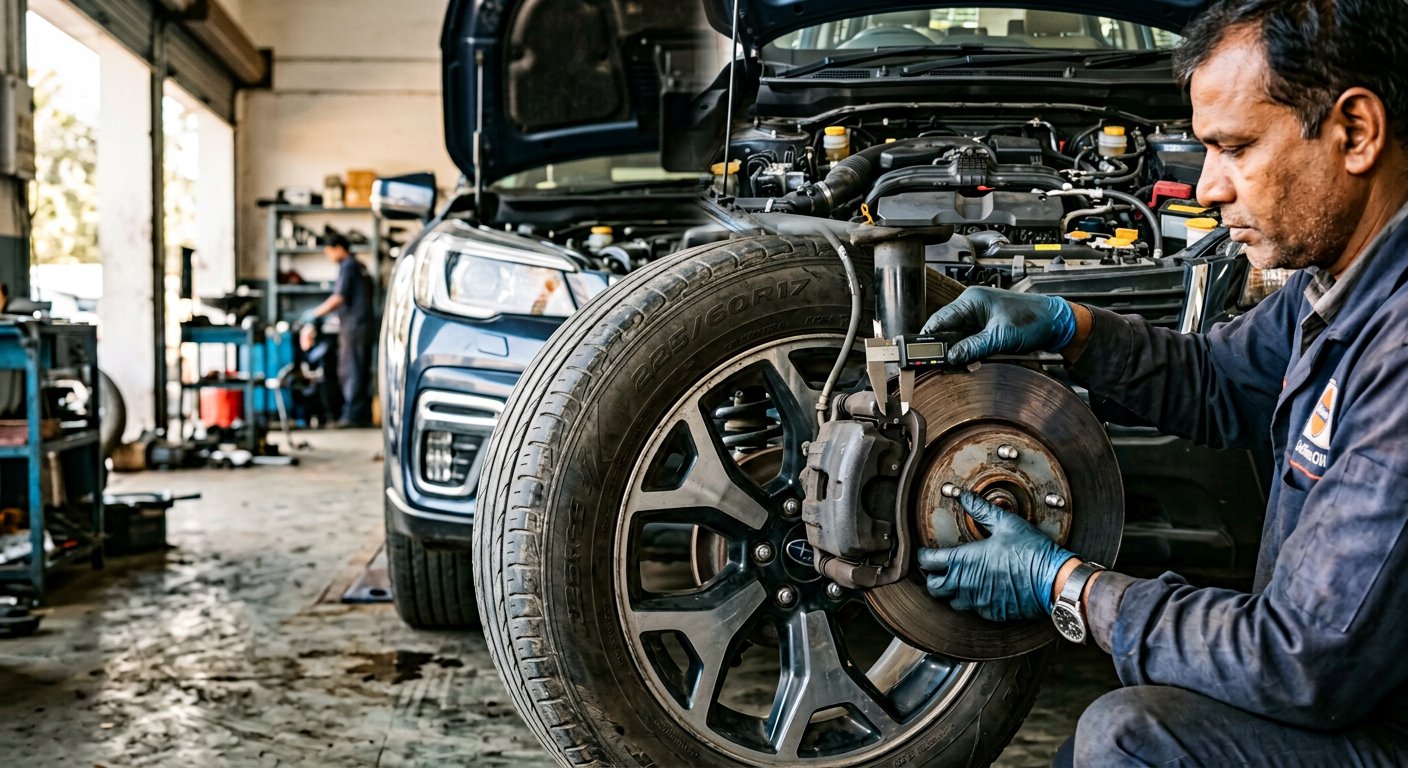
| 2. Brake pad thickness | Above 60% for hill work | Automatics are heavier and rely on the footbrake more on descents |
| 3. Tyre age and tread | Under 4 years old, minimum 3 mm | Hardened rubber loses grip on cold wet mountain surfaces |
| 4. Coolant level and hoses | Full, no cracks or swelling | Torque converters generate additional heat under sustained load |
| 5. Engine oil | Fresh, correct grade for altitude | Hot running degrades oil faster at altitude |
| 6. Heater and demister | Fully working | Essential above 3,000 m; a fogged windscreen is a safety issue |
| 7. Spare wheel and jack | Present, inflated, accessible | A puncture between Uttarkashi and Gangotri means a very long wait |
Identify Your Transmission Type First
| Type | How to Identify It | Hill Behaviour | Precaution |
|---|---|---|---|
| AMT | Jerky upshifts; usually in budget hatchbacks | Adequate | Ease off the throttle during shifts |
| CVT | Smooth but constant engine drone | Good, but revs climb | Do not floor it on long climbs |
| Torque converter | Smooth, traditional; has S or manual gate | Best for hills | Use S on descents |
| DCT/DSG | Fast shifts, jerks at low speed | Good | Never hold on the throttle in traffic |
If you do not know which you have, check the owner's manual or the gear selector itself. A gate with +/− markings indicates a manual mode; letters like L, 2 and S indicate selectable ranges.
Additional Checks for Long Hill Trips
| Check | Requirement |
|---|---|
| Transmission fluid | Correct level and colour; burnt smell means service before the trip |
| Battery | Over 2 years old and weak in cold weather — replace before a winter yatra |
| Wipers and washer fluid | Working and full; sudden hill showers are common year-round |
| Headlights and fog lamps | Both working; fog lamps matter more than high beam in hill mist |
| Ground clearance | Sedan is workable; SUV strongly preferable on rougher sections |
| First aid and torch | Present in the boot |
| Insurance validity | Current, and covering the states you will enter |
The Three Failures That Cost the Most
| Failure | Cause | Typical Repair Cost |
|---|---|---|
| Burnt DCT/AMT clutch pack | Holding the car on the throttle in traffic or on a slope | ₹45,000–₹1,20,000 |
| Overheated transmission fluid | Sustained climbing without cooling, or old fluid | ₹15,000–₹40,000 |
| Warped brake discs | Riding the footbrake down a long gradient | ₹8,000–₹25,000 |
| Coolant system failure | Old hoses under sustained altitude load | ₹10,000–₹30,000 |
| Engine damage from oil breakdown | Old oil under sustained high load | ₹60,000+ |
Every one of these is prevented by the checklist above. None of them is a matter of bad luck.
What to Tell the Driver
Briefing a Driver on Your Automatic
- Show him the mode selector. Point out L, 2, S or the manual gate and confirm he knows how to use it.
- State your expectation on descents. "Change down before the descent, not during it." Say it explicitly.
- Explain the traffic rule. Hold the car on the brake, never on the accelerator, in jams.
- Point out the temperature gauge. Ask him to tell you if it rises above normal rather than waiting.
- Confirm he will report faults immediately. Not at the end of the trip — the moment something changes.
- Agree a cooling stop policy. On descents longer than 10 km, a 10-minute stop is cheap insurance.
Automatic vs Manual for Uttarakhand
| Factor | Automatic | Manual |
|---|---|---|
| City comfort | Far better | Tiring in traffic |
| Hill control | Good with L/S mode | Better |
| Repair cost if damaged | ₹45,000–₹1,20,000 | ₹8,000–₹25,000 |
| Driver availability | Fewer experienced | More available |
| Fuel efficiency | Comparable now | Slightly better historically |
| Rough unpaved roads | Workable | Simpler |
For most families the automatic is the right choice for comfort. The caveat is that a driver who has only driven manuals needs to be told the descent technique explicitly rather than assumed to know it.
Frequently Asked Questions
What should I check on an automatic car before a hill trip?
Seven things: whether it has L, 2 or S mode; brake pads above 60% thickness; tyres under four years old with at least 3 mm tread; coolant level and hose condition; fresh engine oil; a working heater and demister; and a serviceable spare wheel.
Why does an automatic need more checking than a manual?
Because the repairs are far more expensive. A burnt clutch pack on a DCT or AMT costs ₹45,000–₹1,20,000 against ₹8,000–₹25,000 for a manual clutch. Every common failure is preventable with inspection.
How do I know which transmission type my car has?
Check the owner's manual or the gear selector. A gate with +/− markings indicates a manual mode; letters like L, 2 and S indicate selectable ranges. Jerky upshifts suggest AMT, a constant engine drone suggests CVT.
Which automatic transmission is best for hills?
Torque converter, because it is smoothest under sustained load and usually has an S or manual mode for descents. DCT is also good. AMT and CVT are workable with the right technique.
What is the most expensive automatic failure on hill roads?
A burnt DCT or AMT clutch pack from holding the car on the accelerator in traffic or on a slope. It costs ₹45,000–₹1,20,000 and is entirely avoidable by holding the car on the brake instead.
Can a sedan complete a Char Dham circuit?
Yes, but an SUV with good ground clearance is strongly preferable. A sedan manages but suffers on the rougher sections between Guptkashi and Sonprayag.
What should I tell the driver about my automatic?
Show him the mode selector, state that he should change down before a descent rather than during it, explain that the car must be held on the brake in traffic, and ask him to report any temperature rise or fault immediately.
Should I plan cooling stops on descents?
Yes, on any descent longer than 10 kilometres. A ten-minute stop is cheap insurance against warped brake discs and overheated transmission fluid, both of which cost tens of thousands to repair.
Drivers who know automatics
We confirm transmission experience before placement, and brief every driver on your specific car.
More guides.
Own Car Driver vs Taxi in Dehradun: 2026 Cost Comparison
A line-by-line 2026 cost comparison between hiring a driver for your own car and booking a taxi in Dehradun — with the six hidden taxi charges that never appear in the quoted fare.
Char Dham Yatra Best Time to Go & Why a Local Driver Matters
When to plan Char Dham Yatra in 2026 — month-by-month crowd, weather and landslide reality, the standard 9 to 11 day route, real costs including the ₹1,799/day driver rate, and why hill-route experience is non-negotiable.
Night Driver Safety Tips in Dehradun: Fog, Fatigue & Rates 2026
The complete night driving guide for Dehradun and the Uttarakhand hills — what it costs, the three risks that dominate, the correct fog technique, fog intensity by month, route-by-route risk, and the fatigue rules that matter most.
Need a driver right now?
Call or WhatsApp — a verified Pahadi driver for your own car reaches you in minutes. Fixed fare, no advance, 24×7.